Podcast: Play in new window | Download
Subscribe: Apple Podcasts | Spotify | Pandora | RSS | More
Updated September 5, 2023
Subtitle
Getting bookstores to accept your book and give it shelf space is time-consuming, difficult to achieve, and costly
Synopsis
Getting bookstores to accept your book and give it shelf space is time-consuming, difficult to achieve, and costly for the self-publisher. Here are ten reasons a new self-publisher should AVOID spending valuable time and money trying to get their book into brick-and-mortar bookstores.

What You Will Learn
1. You will learn why you should avoid selling your books to bookstores.
2. You will learn why most self-publishers will not make money selling through bookstores.
3. You will learn why bookstores do not want to sell self-published books.
Introduction
Getting bookstores to accept your book and give it shelf space is time-consuming, difficult to achieve, and costly for the self-publisher. Most bookstores are reluctant to take books from self-publishers.
And to make matters worse, as a small independent or self-publisher, you would be at the complete mercy of the bookstores. They set all of the terms, whether you like them or not.
But even if you do everything they want and spend lots of time and money to get a bookstore to accept your book and give it some self-space, there is no guarantee they will sell it.
Here are ten practical reasons that a new self-publisher should avoid spending valuable time and money trying to get their book into brick-and-mortar bookstores:
Reason # 1. Bookstores Only Take Books They Deem Will Sell More than a Few Copies
They rarely believe that a self-published book will sell more than a few copies. They know that small publishers do not have the power, connections, budget, or time to execute a large and sophisticated marketing plan.
Reason # 2. Bookstores Will Typically Order Less than 10 Copies
Even if they accept your book and agree to give it a few inches of shelf space, most bookstores will order less than ten copies at a time. Limited space in the stockroom is one reason. Second, your book will only be given a short time to prove it will sell. If it does not sell, they will remove it from their shelf.
Reason # 3. Bookstores Only Accept Books That Are Returnable to the Publisher
And they might return all your books to you – and you must pay to get them back. Some big bookstore chains know that small publishers cannot afford to buy back the books. They will then offer to repurchase your books for almost nothing and put your book on their discount table.
Reason # 4. Bookstores Expect the Publisher to Pay For Shipping Both Ways
High shipping costs are a fact of life for the self-publisher that self-distributes. It is also time-consuming to package your books for shipping, and shipping fees are expensive.
Reason # 5. Bookstores Sell Very Few Books Compared to the Online Retailers
This reason is especially valid for self-publishers. Big-name, well-established authors and the most prominent publishers are the ones that get the best displays and locations in the bookstore – because they sell a lot of copies.
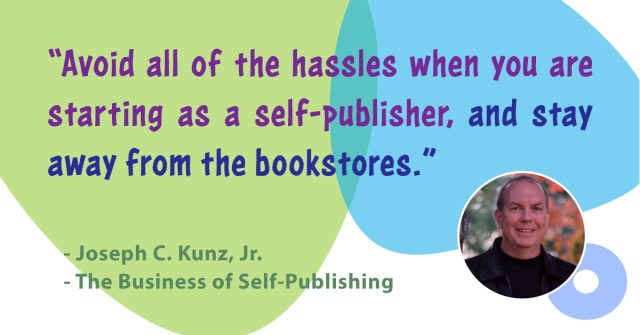
Reason # 6. Bookstores Physically Do Not Have Enough Room to Stock All Titles
The small bookstores might stock 5,000 titles. The huge bookstores might stock 140,000 titles. Amazon reserves a few million titles. You will spend lots of time and money trying to get your book into bookstores, most of which simply do not have the physical space to store your book.
Reason # 7. Bookstores Will Force You to Take Back All of the Damaged Copies
Your book will sit on the bookstore’s shelf, get handled, bent, banged up, etc., and then the bookstore will force you to take it back and expect you to pay for the return shipping.
Reason # 8. Bookstores Have a Bias against Self-Published Books for Two Big Reasons
a. The reputation of too many vanity presses and self-publishers producing low-quality, un-sellable, and un-marketable books.
b. Self-publishers typically lack the proper relationships with distributors. Therefore, their books can be challenging to obtain.
Reason # 9. Bookstores Can Order Your Book Even When It Is Not on Their Shelf
Almost every bookstore in America can order a book online through programs such as IngramSpark. The book will then get shipped to the bookstore, and the customer will pick it up. Signing with a distributor that accepts self-publishers is an easy way to avoid many – but not all – of the headaches of selling through bookstores.
Reason # 10. Bookstores Can Easily Take 90 to 120 Days to Pay You
As a small, independent publisher or self-publisher, you would be at the complete mercy of the bookstores. They set all of the terms, whether you like them or not. And as a small publisher, waiting several months for your money can be devastating.
Conclusion
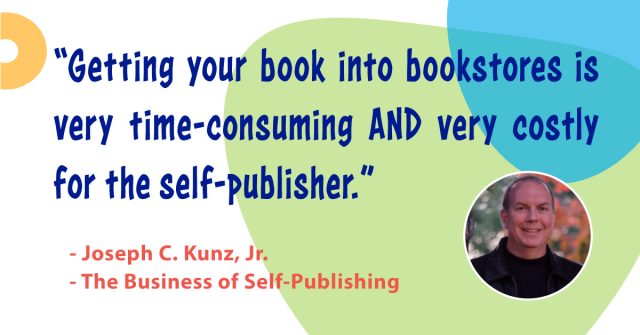
Avoid all the distribution, sales, and financial hassles when starting as a self-publisher, and stay away from the brick-and-mortar bookstores. Almost all book sales are through Amazon, not the bookstores.
Amazon and your website will give your book more exposure to the book-buying public than any bookstore worldwide could ever provide.
It will be much more profitable and a better use of your time to devote more effort to improving your book’s Amazon page and your website.
Questions to Think About
1. As a self-publisher, what experiences have you had trying to get your book into big and small bookstores?
2. Was it profitable for you? How long did it last?